Key Points
Your standard HO-3 policy in Florida offers protection, but do you know what it DOESN'T cover during hurricane season? Find out why wind and floods require additional coverage for your peace of mind.
Florida, the "Sunshine State," is famous for its paradisiacal beaches, warm climate, and vibrant culture. It's a dream destination for millions and home to a growing population. However, living in this paradise comes with an undeniable reality: hurricane season. Every year, from June to November, Florida residents prepare for the possibility of tropical storms and hurricanes that can bring devastating winds and torrential rains. Faced with this threat, many homeowners understandably assume that their standard homeowner's insurance policy (the popular HO-3) will protect them against any eventuality. Unfortunately, this assumption is one of the most dangerous and costly coverage gaps that property owners in Florida can face.
The purpose of this article is to demystify the protection offered by an HO-3 policy and shed light on the crucial differences between wind damage and flood damage, as well as other limitations that could leave you financially vulnerable. Understanding these distinctions is not just a matter of insurance jargon; it is an imperative necessity to protect your assets and ensure your family's peace of mind.
What is a Standard HO-3 Policy in Florida?
Before addressing what it doesn't cover, it's essential to understand what an HO-3 policy *does* cover. This is the most common type of homeowner's insurance in Florida and throughout the United States. It is characterized by offering "open perils" coverage for the structure of your home and other structures (like garages or sheds) on your property, and "named perils" coverage for your personal belongings. This means the structure is protected against almost everything, unless a peril is specifically excluded in the policy. On the other hand, your personal possessions are only covered against the risks explicitly listed.
Typically, an HO-3 policy covers:
- Fire and smoke damage.
- Theft and vandalism.
- Certain forms of water damage (e.g., a burst pipe inside the house, not flooding from the outside).
- Wind damage (generally, but with important caveats that we will discuss).
- Hail damage.
- Falling objects (such as trees).
- Personal liability if someone is injured on your property.
- Additional Living Expenses (ALE) if your home becomes uninhabitable due to a covered peril.
The list seems exhaustive, doesn't it? And it is for many everyday risks. However, it is in the context of a tropical storm or hurricane that the "exclusions" of your HO-3 policy become critical.
The Great Misconception: Hurricane Wind vs. Flood
This is where the greatest confusion and often the greatest financial danger for Florida homeowners lies. When we think of a hurricane, we think of "hurricane damage," encompassing both wind and water. But for insurance companies, these are two fundamentally different risks.
1. Hurricane Wind Damage and the Hurricane Deductible
Yes, your standard HO-3 policy generally covers damage caused by hurricane winds. If a hurricane tears off your roof, breaks your windows, or knocks down a wall due to wind force, your HO-3 policy will likely cover it. But there is a gigantic "but": the hurricane deductible.
Unlike a standard deductible (which might be a fixed amount like $1,000 or $2,500), the hurricane deductible is almost always a percentage of your home's insured value (not the damage amount). In Florida, it's common to see hurricane deductibles of 2%, 5%, or even 10% of your home's rebuilding value. This means that if your home is insured for $300,000 and has a 5% hurricane deductible, you would be responsible for the first $15,000 in wind damage before your insurance starts to pay. If your standard deductible was $2,500, the difference is vast. This amount is not trivial and can be a devastating financial blow if you are not prepared.
It's crucial to understand that the hurricane deductible comes into play only when the storm reaches hurricane status and its damages are directly related to the hurricane wind. The exact definition of when it activates may vary slightly depending on the policy and state, but it generally begins with the declaration of a hurricane watch or warning and ends hours or days after the storm passes.
2. The Most Dangerous Exclusion: Flood Damage
This is the harshest and least understood truth: your standard HO-3 policy, or any standard homeowner's insurance policy, DOES NOT cover flood damage. Period.
It doesn't matter if the flood is caused by a hurricane, a tropical storm, torrential rains, the overflowing of a river, a lake, a canal, or even water rising from the ground. If water enters your home from the outside and covers at least two acres of land or two properties, it is considered a flood, and your HO-3 policy will not pay a single cent for the resulting damage.
This includes, and is vital for Florida, storm surge. Storm surge is the abnormal rise in sea level generated by the storm, which moves inland, causing massive coastal flooding. Although directly caused by a hurricane, storm surge is, by definition, a flood. Images of homes devastated by storm surge are common after a major hurricane, and homeowners with only an HO-3 policy find themselves in a catastrophic financial situation.
The confusion arises because if a hurricane's wind tears off your roof and then it rains heavily and water enters, that *might* be covered (since the initial wind damage is covered). But if water rises from the ground through the foundation, or enters through doors and windows due to rising water levels, that is flooding and is not covered. The distinction is often subtle and can be a source of disputes with insurers.
Not sure if your doctor is in-network?
Speak with a certified agent to clear your doubts. It's 100% free.
Speak with an AgentOther Relevant Limitations and Exclusions During Hurricane Season
Beyond the major flood gap, there are other areas where your HO-3 policy might not offer the protection you expect during and after a hurricane:
- Water Damage (not flood) vs. Flood: As mentioned, water entering through a wind-damaged roof may be covered. However, if rain collects on the ground and then seeps through walls or foundations, it's a gray area that insurers might consider flooding. The origin of the water is crucial.
- Mold Growth: Mold and mildew are common consequences of moisture after a hurricane. HO-3 policies often have very strict limits for mold coverage, or exclude it entirely if the primary cause was an uncovered flood. Mold remediation can be extremely expensive.
- Sewer Backup and Sump Pump Overflow: If heavy rains or storm surge overload public sewer systems, causing sewage or drains to back up into your home, most HO-3 policies exclude it. For this coverage, you generally need an additional endorsement.
- Food Loss due to Power Outage: If a hurricane causes a prolonged power outage and your food in the refrigerator and freezer spoils, your HO-3 policy will rarely cover it. Some policies may offer very limited coverage, but it is not the norm.
The Solution: Essential Additional Policies
Given the reality of HO-3 coverage gaps, Florida homeowners should seriously consider acquiring additional policies for complete protection.
1. Flood Insurance
This is undoubtedly the most important policy for any Florida resident, whether or not they are in a high-risk zone. Floods can occur anywhere, not just on the coast. In fact, more than 20% of flood claims come from properties outside designated high-risk zones.
Options include:
- National Flood Insurance Program (NFIP): Administered by FEMA, it is the primary source of flood insurance in the U.S. It has coverage limits (currently $250,000 for the structure and $100,000 for contents). It is accessible and often the only option in very high-risk areas.
- Private Flood Insurance: The private flood insurance market has grown in Florida, sometimes offering higher coverage limits, shorter waiting periods, and competitive prices for certain properties.
A crucial fact: Both options usually have a 30-day waiting period (sometimes 15 in the private market) before coverage takes effect. Do not wait for a storm to form in the Atlantic to try to buy it; by then, it will be too late.
2. Wind-Only Insurance (when necessary)
In some very high-risk coastal areas or older properties, private HO-3 insurers may choose to exclude hurricane wind coverage from their standard policy. In such cases, the homeowner must purchase a separate "wind-only" policy. In Florida, this is often obtained through Citizens Property Insurance Corporation, the state's insurer of last resort, or through other specialized markets.
If your HO-3 policy does not include hurricane wind coverage, it is as critical a gap as not having flood insurance. Be sure to ask your agent if your current policy includes this coverage or if you need an additional policy.
Why Does the Confusion Persist?
The main reason for the persistent confusion is assumption. Homeowners hear "homeowner's insurance" and automatically assume it covers all natural disasters that could affect their home. Furthermore, the distinction between "wind damage" and "flood damage" may seem like a technicality to the average consumer, but it is a giant dividing line in the insurance world. The terminology and complexity of policies do not make things easier, and often, homeowners only discover these limitations when it is too late.
Proactive Steps to Protect Your Assets in Florida
Don't wait until a hurricane forecast is on your screen. Take action now to ensure your home and finances are protected:
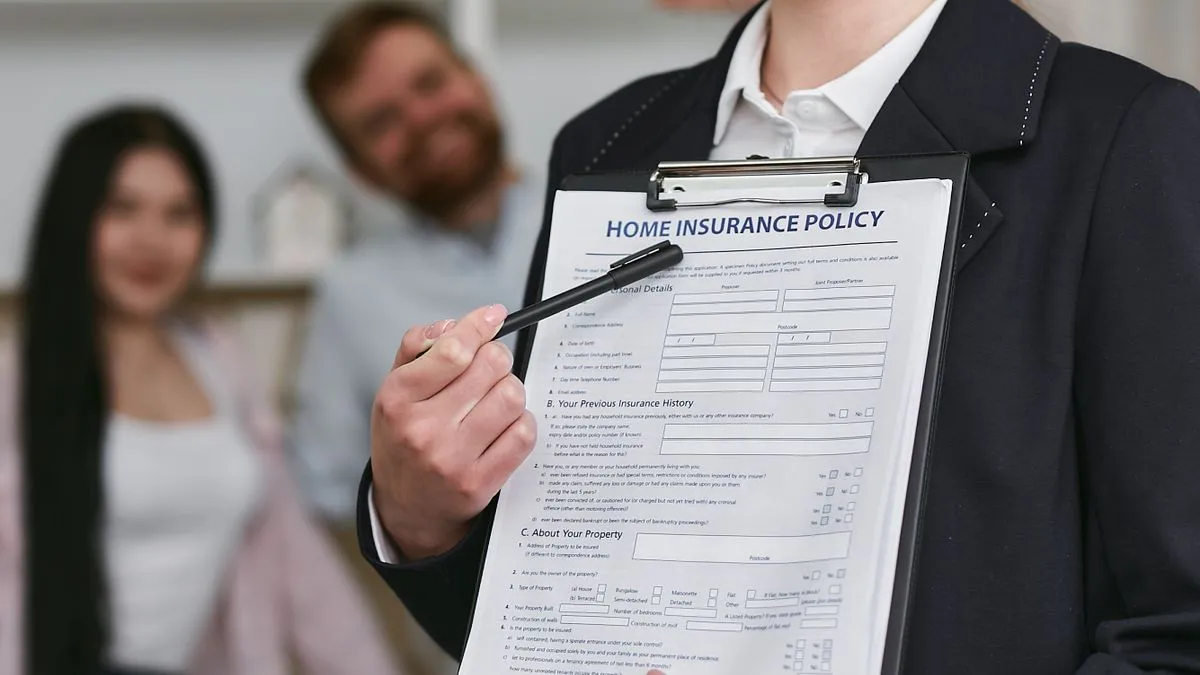
- Read Your Policy Declaration Carefully: This key document summarizes your coverages, limits, deductibles, and exclusions. Pay special attention to the "Covered Perils," "Exclusions," and "Deductibles" sections.
- Speak with an Independent Insurance Agent: An experienced Florida insurance agent can review your current policy, identify coverage gaps, and offer options for flood and wind policies, if necessary. They understand the local market and can compare offers from different insurers.
- Get Flood Insurance TODAY: As mentioned, the waiting period is real. There is no "open enrollment period" for flood insurance; you can buy it at any time.
- Understand Your Hurricane Deductible: Know exactly what your percentage is and what it means in dollar terms. Plan to have those funds available.
- Document Your Home and Possessions: Create a detailed inventory of your belongings, with photos or videos. Store a copy in the cloud or off-site. This will expedite any claims process.
- Consider Additional Endorsements: Ask about endorsements for sewer backup coverage or higher limits for mold remediation.
Conclusion
Living in Florida is a privilege, but it demands proper preparation, especially regarding the protection of your home. The belief that a standard HO-3 policy will protect you against "everything" during hurricane season is a dangerous myth. Wind damage has special deductibles, and, more critically, floods are categorically excluded. Do not leave your financial future to chance or ignorance.
Take the time to educate yourself, review your policy with a professional, and acquire the necessary additional coverages. Only then can you face hurricane season with true peace of mind, knowing that your home and family are as protected as possible.